
An Evening with David Morris Fine Art Photography and Spiritual Portraits on Wednesday, 7th October 2026 at 7.30 pm
Some photographs feel quiet at first, then stay with you long after you’ve looked away. That’s the pull of David Morris’s work. He isn’t chasing spectacle. He’s looking closely at familiar rooms, familiar faces, and the odd, charged moments that happen when people are between one state and another.
David learned photography in the early 70s at Hull College of Art, and that grounding still shows. His pictures have a strong sense of craft, but they don’t feel cold or overworked. They come from knowing a place, watching patiently, and trusting small details to carry meaning.
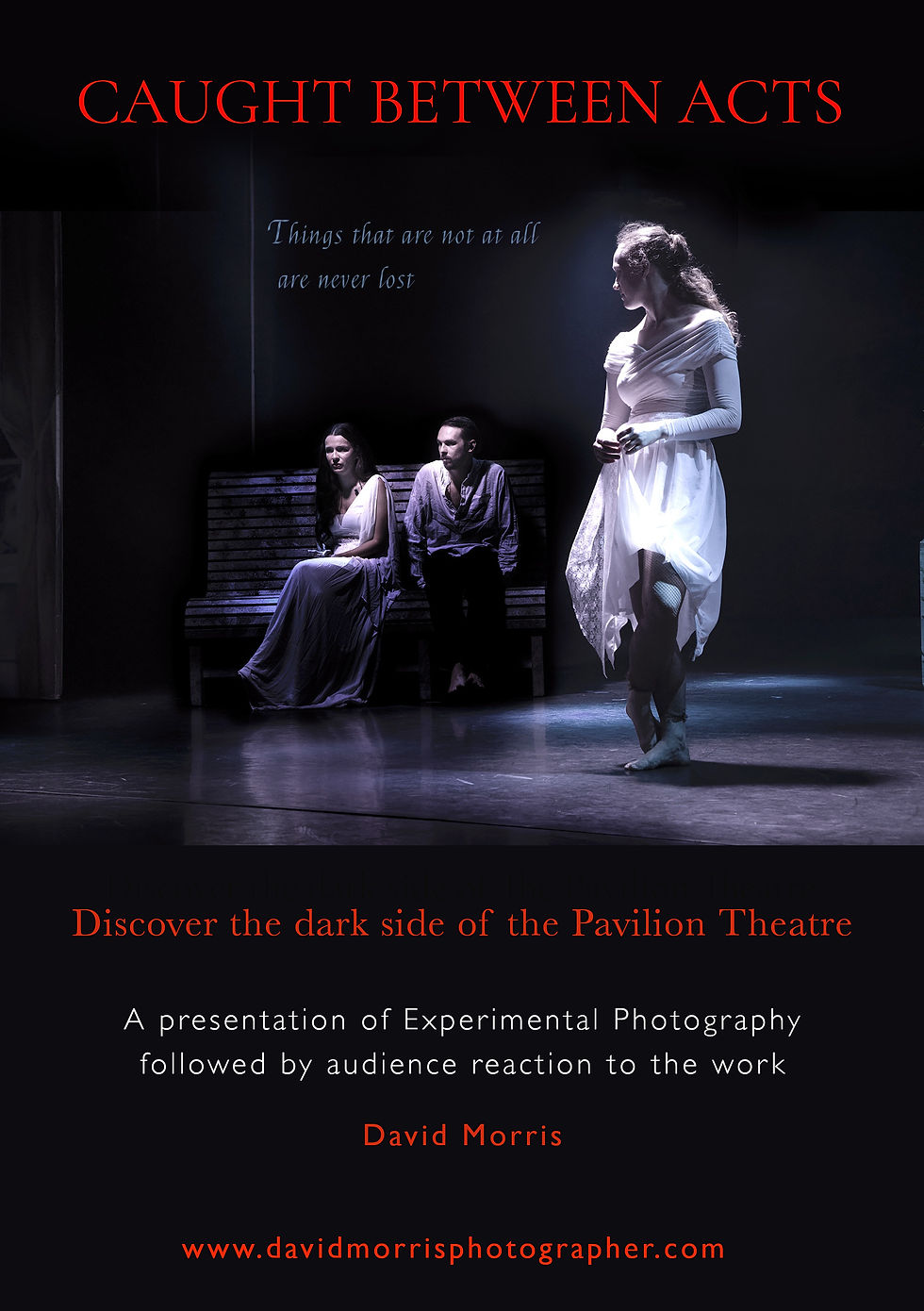
Tonight’s presentation brings together two bodies of work: Caught Between Acts, a study of the Pavilion Theatre Cromer during rehearsals, and Dangerous Portraits, a series of individuals photographed, from the spiritual to the dangerous under the heading Spiritual Beings. If you enjoy photographing real people in real places, this should be a rich evening.

David Morris looks for the moment beneath the surface
A lot of strong photography starts with access, but it doesn’t end there. Being allowed into a theatre rehearsal or a church setting is only the first step. The real skill is knowing what to do once you’re there.
David’s work is rooted in attention. He photographs the people and places he knows well, which gives the pictures a different kind of depth. There’s familiarity in them, but not laziness. He isn’t taking a quick record shot and moving on. He’s watching how people hold themselves, how rooms shape mood, and how light changes the feeling of a face.
That’s useful to think about, especially if photography often feels rushed. Not every subject needs to be dramatic. Sometimes the strongest image comes from a pause, a glance, a half-seen gesture, or someone standing in a room that carries its own history.
For amateur photographers, that’s encouraging. You don’t need faraway locations to make meaningful work. You need to care about what’s in front of you, and you need to return to it often enough that you stop seeing only the obvious.
Caught Between Acts finds theatre before the curtain rises
Theatre photographs often focus on the finished performance. Costumes are ready, lights are set, and everyone knows where they’re meant to be. Rehearsals are different. They’re looser, more uncertain, and often more revealing.
Caught Between Acts studies the Pavilion Theatre Cromer during rehearsals. That setting matters. A theatre between shows has its own strange energy. It’s not quite public, not quite private. People are working, waiting, testing, repeating, listening. The stage may look empty one minute, then full of movement the next.
That in-between feeling is a gift for photographers. Rehearsals can show:
Concentration before a line is spoken
A performer half in character and half themselves
Small interactions between cast and crew
The contrast between stage light and ordinary working light
The practical mess that sits behind a polished show
The title Caught Between Acts suggests that David is interested in more than theatre as entertainment. He’s looking at transition. What happens before the audience arrives? What does performance look like before it becomes performance?
There’s a good lesson here. When photographing events, it’s tempting to wait only for the “main” moment. The speech, the applause, the final pose, the finished scene. But the edges often tell a better story. The preparation, the waiting, and the checking can carry more life than the official moment.
Dangerous Portraits asks what a portrait can hold
The second part of the evening, Dangerous Portraits, sounds very different at first. These are individual portraits, described through the idea of spiritual beings. But it shares something important with the theatre work: both projects look at people in charged spaces.
It brings silence, scale, ritual, memory, and sometimes discomfort. Even when someone isn’t shown in a formal religious way, the setting affects how we read the image. Stone, wood, stained glass, worn floors, and soft light all add layers of meaning.
The word “dangerous” is interesting too. A portrait can be dangerous because it asks for honesty. It can unsettle simple ideas of who a person is. It can show confidence and doubt at the same time. It can make the viewer feel that they’re not just looking at a face, but being looked back at.
That’s one of the hardest things in portrait photography. A good portrait isn’t only about sharp focus or a pleasing background. It relies on trust, timing, and mood. The sitter needs space to be themselves, and the photographer needs the patience to notice when something real appears.
Light may be dim, uneven, or falling from one high window. That can be a problem, but it can also create the quiet tension that makes a portrait sing.
What photographers can take from the evening
This isn’t just a chance to look at finished pictures. It’s a chance to think about approach. David’s work points towards a slower, more thoughtful way of making fine art images, one that values connection over novelty.
A few ideas are worth taking into your own photography:
Return to familiar places
Repeated visits help you see beyond the obvious view.
Watch the pauses
People often reveal more between actions than during the main event.
Let the setting speak
A room, stage, aisle, or doorway can shape the meaning of a portrait.
Be patient with people
Strong portraits often come after the sitter stops performing for the camera.
Work with the light you have
Natural light can be awkward, but it can also bring atmosphere and truth.
The link between people and places, Pavilion Theatre Cromer, Spiritual Beings, and portraiture gives this evening a clear thread. It’s about presence. Where people stand, what surrounds them, and what can be felt but not easily explained.
You can see more of David’s photography at davidmorrisphotographer.com.
FAQ
Who is David Morris?
David Morris is a photographer who studied at Hull College of Art in the early 70s. His work now centres on fine art photography of people and places he knows well.
What is Caught Between Acts about?
Caught Between Acts is a study of the Pavilion Theatre Cromer during rehearsals. It looks at theatre in its working state, before the finished performance reaches the audience.
What are Dangerous Portraits?
Dangerous Portraits is a series of individuals photographed in churches. The project explores portraiture, spiritual presence, and the atmosphere created by sacred spaces.
Is this evening suitable for newer photographers?
Yes. The themes are very accessible, especially if you’re interested in portraits, documentary-style work, theatre photography, or using familiar places as serious subjects.
Where can I find future programme details?
For more talks and club evenings, see the Lowestoft Photographic Club current programme.
A quiet lesson in looking harder
David Morris’s photography is a reminder that powerful pictures don’t always shout. Sometimes they wait in rehearsal rooms, church aisles, side glances, and ordinary pauses.
That’s what makes this evening so appealing. It offers the pleasure of seeing strong work, but also the chance to come away looking at familiar places with a bit more care.


Comments